
In Part 1, I described our first concept: an electric heater above a standard ceramic bowl. This is what happened when we actually built it. Three prototypes, three different ways of being wrong.
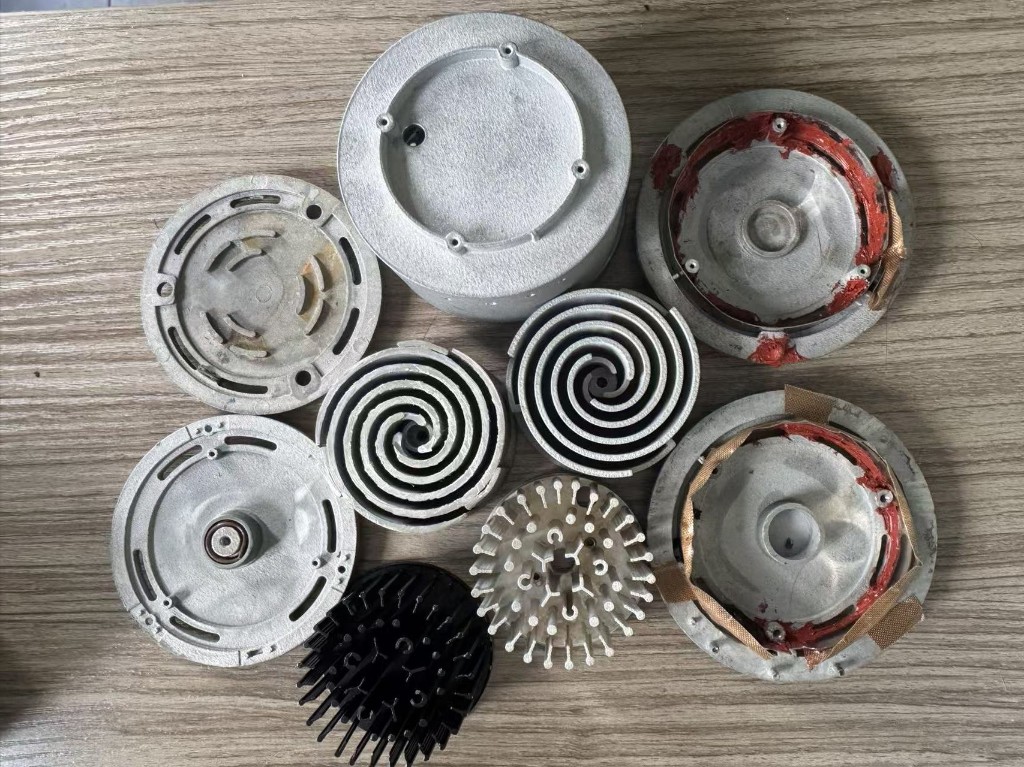
Prototype 1 — Crude, and confidently wrong
The first build was deliberately rough. The idea was to imitate how charcoal works: a ceramic heating plate warms an aluminum heatsink (the kind used for LED lights), standing in for the glowing coal. Air is pushed through the heatsink fins, and the heated air flows down onto the tobacco.
Before testing, I asked an AI tool to run the thermal calculations. After some impressively complicated formulas, it told me that reaching 300°C at the air outlet would be no problem.
So we powered it on. Too young, too simple.
There was almost no vapor. Holding the heat longer or raising the temperature made no real difference. The calculation was fine; the model was not. We had treated the airflow as an afterthought — there was no real air path design, so the heat never made it to the tobacco in a useful form.
Lesson: the airflow path matters as much as the heat source. Back to the drawing board.
Prototype 2 — The right temperature, the wrong result
For the second version we designed a proper air path. Air enters at the center, travels outward along three spiral tracks inside the aluminum body, and exits through outlet holes directly onto the tobacco.
This time something happened: a little vapor, a little aroma. We were encouraged — but it was weak. Honestly, it was not noticeably different from what other products on the market already deliver. That was not the bar we had set for ourselves.
So we measured temperatures at every point along the path. The air at the outlet was almost the same temperature as the aluminum body — the heat transfer inside the heater was working. But at the tobacco itself, the temperature dropped sharply.
The cause: the air was not carrying enough heat, and once it left the outlet it mixed with cooler air around the bowl. By the time it reached the tobacco, most of its temperature advantage was gone.
Lesson: measuring the outlet temperature is not the same as measuring the temperature that reaches the tobacco. Hot air alone carries too little energy to survive the trip.
Prototype 3 — Closest to success, and still not enough
Applying both lessons, we kept the spiral air path but dropped the ceramic plate. A ceramic rod at the center became the heat source, pushing the outlet temperature up to 400°C. We also added a thin 304 stainless steel plate between the air path and the tobacco to even out the heat and keep more of it where it was needed.
This time the temperature at the tobacco was right — and so were the results. Vapor and aroma finally appeared. It was the closest we had come to a working product.
We still abandoned it, for two reasons:
- Warm-up time was too long. The ceramic bowl needed at least 15 minutes of preheating before real vapor and aroma appeared. That is not something a busy lounge can live with.
- Sealing. I could not achieve a reliably tight seal against different ceramic bowls. Even a slight leak around the edge and the vapor disappeared. In the lab we could control this. In a product used with bowls of varying shapes and tolerances, we could not — and a design that only works in the lab is still a failed product.
What we decided
After all these experiments, we let go of our original idea from Part 1.
Not because we could not make it produce vapor — Prototype 3 proved we could — but because it could not meet the real requirements of a lounge: fast warm-up and consistent performance with the bowls people already use.
So we stopped tuning and started redefining the product.
Next
Part 3: post-mortem. What we kept, and what we dropped.